

The Elephant
And the limits of empathy

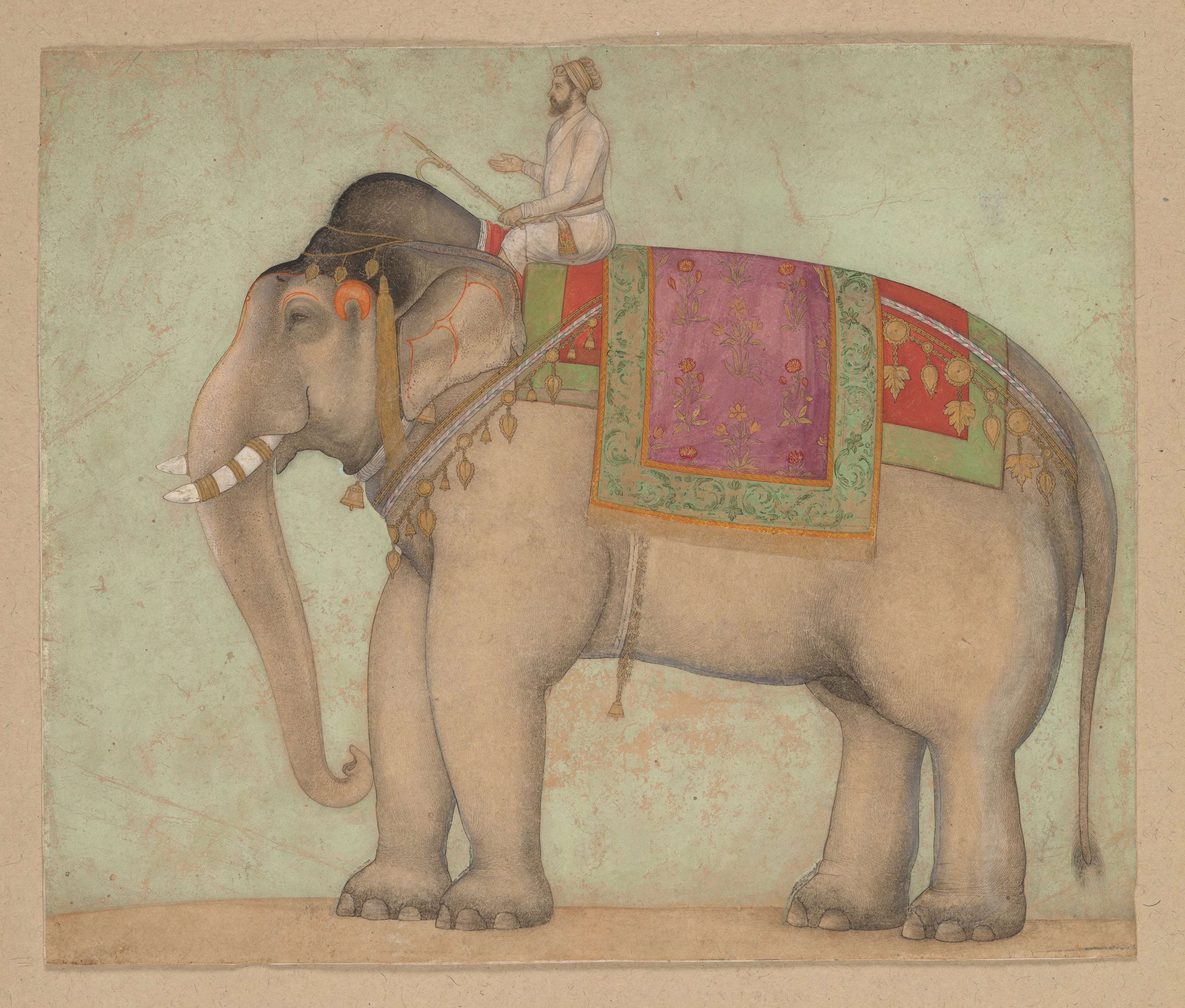
A Fight Broke Out
A group of blind men had been brought before the king of Sāvatthī, each of them was asked to touch different parts of an elephant and then to describe what they felt — a jar, a winnowing basket, a ploughshare, a plough pole, a granary, a post, a mortar, a pestle, a broom. Following this, a dispute arose between the men about the true nature of what they had felt, and this even came to blows. The king watched from a safe distance, thoroughly gratified.
And so goes the story recounted by the Buddha to his disciples to demonstrate that attachment to a fragmented view of reality is often a source of conflict. It’s not as if the experiences of each of the men were not valid, nor were they untruthful, however we can see how these things can unfold when we are placing ownership on that which is perceived through our own senses.
It’s Not Just an Elephant
A pleasant story, no? And who doesn’t love elephants?
Maybe you are dealing with a similar story right now (not necessarily involving an elephant) involving a lack of understanding, between you and your spouse, or your sister or a colleague. How are we supposed to navigate the world when we have, in theory, many more variables of experience than just body parts of a large creature? What if we take this idea further, with a herd of elephants, throw in some tigers and feathered friends, a whole jungle, even?
I am proposing that this is not even coming close to the endless levels of nuance that exist between us and our ability to truly meet someone at their level of understanding, regardless of topic. And when we try, in the wrong way, a number of problems can occur, unless we are careful. We are after all, truly unique individuals with our own kamma, accumulated in this life or the former. We often say that we can relate to someone’s plight, or that we understand their situation. Especially if we’ve identified some related concept of experience. Can’t we?

The Illusion of Understanding
We often mistake empathy for a bridge, when really it is frequently a mirror. Lau and colleagues, in a 2022 study, found something they call an "extreme illusion of understanding" — people becoming genuinely convinced they understood the intentions of speakers whose language they didn't even speak. We aren't necessarily reading the other person at all. We are projecting our own internal scripts onto them and mistaking the result for connection. Which brings us back to the blind men, each utterly convinced of what they were holding.
Borrowed Suffering
There is another layer to this. We have a tendency to invest our emotions so deeply into someone else's story that their experience begins to feel like our own property. Fritz Breithaupt calls this the "empathic endowment effect" — a kind of clandestine self-experience, where we stop defending the truth of someone's situation and start defending our emotional stake in it. We are no longer really seeing them. We are protecting our investment.
The Tribal Spotlight
Empathy is a spotlight, not a floodlight. And the uncomfortable truth is that spotlight has always had a bias. Our brains measurably dampen their empathic response when witnessing the suffering of people we perceive as outsiders. Layer onto this what psychologist Deborah Small calls the Identifiable Victim Effect — we will move mountains for one specific person whose face we can see, while remaining largely unmoved by the statistical suffering of thousands. The spotlight lands where it is tribal, not where it is needed most.
The Exhaustion Trap
Perhaps the most quietly destructive pitfall is what happens when we take on another person's pain as though it were our own. Rather than motivating us to help, this kind of empathic distress tends to produce anxiety, paralysis, and eventually withdrawal. We protect ourselves by switching off. This is the root of what neuroscientist Tania Singer identifies as compassion fatigue — and the important thing to understand is that it isn't compassion that exhausts us. It is the cost of feeling with someone without any stabilising wisdom beneath it.
The Echo of Hearsay
There is one more layer worth naming. In a courtroom, hearsay — secondhand information — is typically thrown out. Not because the person sharing it is lying, but because the chain of transmission makes it unreliable by nature. And yet in our personal lives, we build entire emotional worlds on exactly this. When a friend comes to us mid-conflict, we are rarely there at the elephant ourselves. We are hearing their account of having touched it — already filtered through their own blind spots, their own kamma, their own very human need to make sense of what happened to them. If our direct perception is already this limited, hearing the story at one remove only compounds the problem. We end up, as it were, defending a ghost of a ghost.
Untangling the Mess
Considering all of these variables, and how they merge into one another, you’d be forgiven for feeling a little overwhelmed.
The root of a solution, at least from a Buddhist perspective, might lie in genuinely sitting with the reality of Paṭiccasamuppāda — Dependent Origination. The idea that all phenomena, mental and physical, arise and cease based on causes and conditions, most of which exist entirely outside our conceptual grasp. And “most” here is an understatement of considerable proportions. We are being invited to make peace with infinite messiness.
When we begin moving toward that understanding, something shifts. We start to zoom out a little on our everyday interactions. We begin accounting for factors we hadn’t considered before, and more importantly, we become more comfortable acknowledging those we simply cannot know.
There is something helpful in the distinction that psychologist Paul Bloom draws in his work on empathy — between what he calls rational compassion and the kind of empathic overarousal we explored earlier. His argument is that caring deeply about someone’s wellbeing, without emotionally merging with their suffering, actually produces better outcomes. Less bias, more clarity, more efficient help. It turns out that a little distance might not be coldness, but wisdom.
The Pali word karuṇā is often translated as compassion, but it is not the same as absorbing another person’s pain as your own. Ancient commentary describes sorrow — soka — as the near enemy of compassion, a kind of failed version of it, because it turns inward and collapses rather than moving outward into action. The antidote the Buddha prescribed was karuṇā held together with upekkhā — equanimity. A steadiness of mind that allows you to feel the weight of someone’s suffering clearly, without being destabilised by it. That stability is precisely what makes genuine help possible.
Which means we get to hold our part of the elephant that little bit more loosely.
Daniel, spot on. We often mistake empathy for the full picture, but it’s usually just two people agreeing on a partial view of the elephant. Equanimity is the sobriety to admit we don’t have the full map.
Even "enlightenment" isn't a God-mode download - it’s just finally seeing the "what-is" without the filters. It doesn't make you all-knowing; it just stops you from hallucinating that your slice of experience is the whole pie.
This is a really enjoyable and interesting read. There is something about the absolute certainty in the appraisal of the parts of the elephants that puts me in mind of Iain McGilchrist's characterisation of the left hemisphere - certain of what they have seen based on information they have, blind to the possibility of more.